
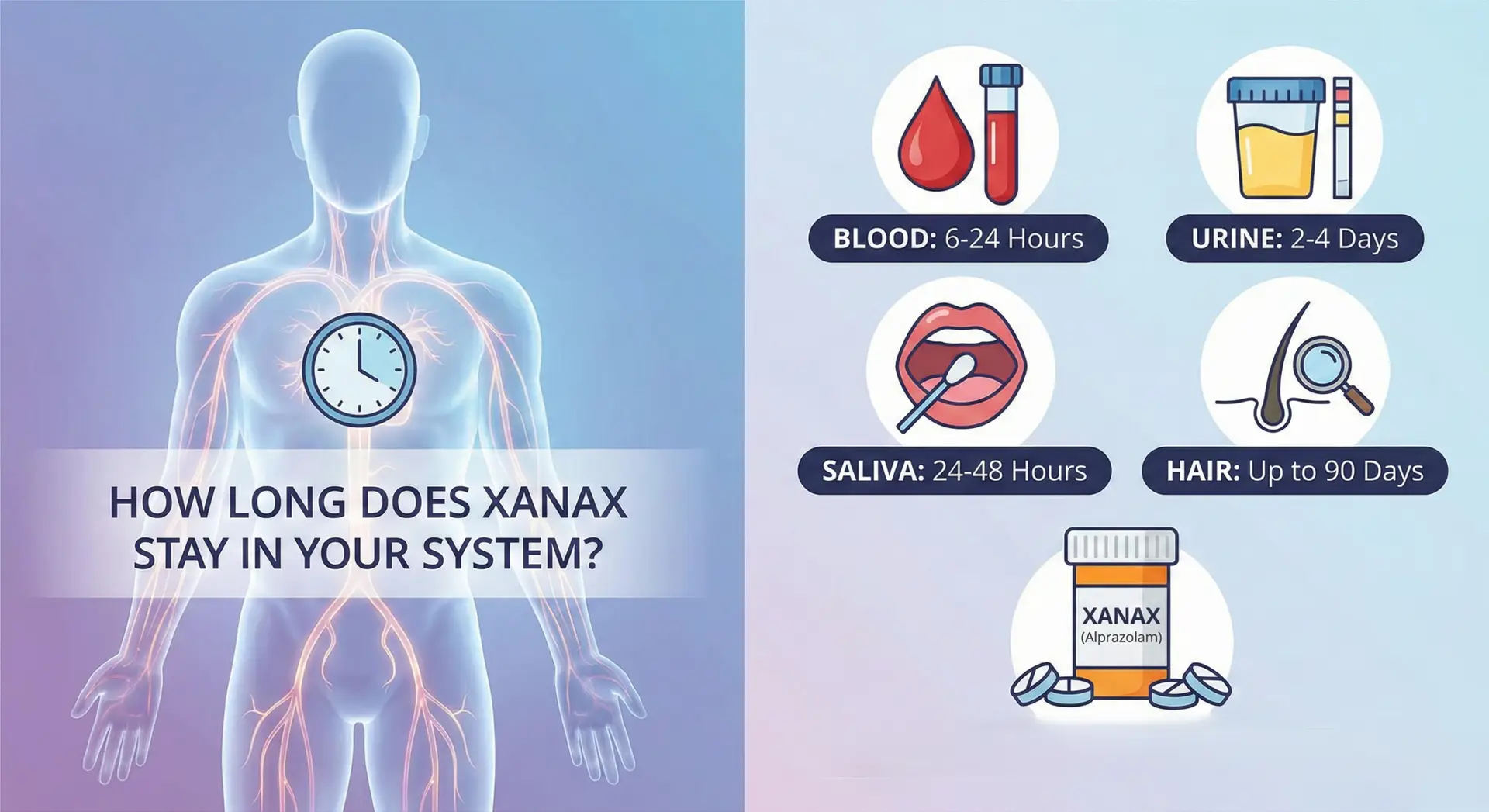
Understanding how long Does Xanax stays in your system is important for drug testing, medication safety, and general awareness. Xanax has a relatively short half-life compared to many other benzodiazepines, but its metabolites can remain detectable for longer periods depending on the testing method. Factors such as dosage, metabolism, age, liver function, hydration, and frequency of use all influence detection windows. Below are frequently asked questions covering urine, blood, saliva, hair testing, and overall duration of Xanax in the human body.
1. How long does Xanax stay in your blood test?
Xanax is typically detectable in blood for about 6–24 hours after use. Blood testing mainly identifies recent ingestion because alprazolam quickly enters and leaves circulation. Detection duration can vary depending on dosage, metabolism, and liver function. Higher doses may slightly extend detection time. Blood tests are often used in emergency or clinical settings.
2. How long does Xanax stay in your system urine?
In urine, Xanax is usually detectable for 2–4 days after occasional use. Chronic or heavy users may show metabolites for up to a week. Urine tests identify breakdown products rather than the active drug itself. Hydration and metabolic rate can influence elimination. This is the most common drug screening method.
3. How to get Xanax out of system quicker?
There is no proven way to rapidly remove Xanax from the body. The liver naturally metabolizes alprazolam before excretion through urine. Staying hydrated and maintaining overall health may support normal elimination. Detox products rarely provide reliable results. Time remains the primary factor in clearance.
4. How long does Xanax show up in urine test?
Xanax typically shows up in urine tests within hours and remains detectable for several days. Occasional users often test positive for 2–4 days, while frequent users may show longer detection. Test sensitivity also affects results. Confirmatory tests can identify alprazolam specifically. Detection varies individually.
5. What does Xanax in system mean?
“Xanax in system” means alprazolam or its metabolites are still present in the body. This presence may be measurable even after noticeable effects fade. Drug tests such as urine, blood, saliva, and hair can detect these compounds. Detection does not necessarily indicate impairment. It reflects residual drug presence.
6. How long is Xanax in urine test?
Most urine tests detect Xanax for several days after use. The duration depends on dose, metabolism, and frequency. Chronic users may experience longer detection windows. Urine screening targets metabolites that linger after effects fade. Individual variability plays a role.
7. How long does Xanax stay in saliva test?
Saliva tests usually detect Xanax for 24–48 hours after ingestion. This method is effective for identifying recent drug use. Saliva concentrations reflect circulating drug levels in the bloodstream. Testing is sometimes used in workplace or roadside screening. Detection may vary with dosage.
8. How long does Xanax stay in your system for pee?
For pee-based screening, Xanax is typically detectable for up to 4 days. Metabolites remain in urine even after therapeutic effects disappear. Repeated dosing can extend the detection window. Pee tests are widely used due to convenience. Metabolism influences elimination speed.
9. Does Xanax show up on a urine test?
Yes, Xanax commonly shows up on urine drug tests as a benzodiazepine. Screening panels detect alprazolam metabolites that remain after use. False negatives can occur depending on test sensitivity. Confirmatory testing improves accuracy. Detection depends on timing and dosage.
10. How long does Xanax stay in hair follicle?
Hair follicle tests can detect Xanax use for up to 90 days. Drug metabolites become embedded in growing hair strands. This provides a long-term record of exposure. Hair testing is often used in forensic or employment contexts. Hair growth rate influences results.
11. How long Xanax stay in urine?
Detection commonly lasts a few days following use. Occasional dosing usually results in shorter detection windows. Chronic use may lead to metabolite buildup. Urine testing remains the most widely used screening method. Metabolism affects duration.
12. How long does Xanax stay in breast milk?
Xanax can remain in breast milk for approximately 36 hours after a dose. Alprazolam passes into milk and may expose infants. Healthcare providers often recommend careful timing of doses. Monitoring infants for sedation is advised. Consultation with a professional is important.
13. How long does Xanax stay in your pee test?
Most pee tests detect Xanax for up to several days after ingestion. Occasional users may test positive for 2–4 days. Chronic users may have extended detection. Pee testing measures metabolites excreted through urine. Individual metabolism influences results.
14. How long does Xanax stay in urine after one use?
After a single dose, Xanax is usually detectable in urine for about 2–3 days. Detection depends on metabolism and hydration levels. Lower doses often clear faster. Urine tests identify metabolites rather than active drug. Variability occurs between individuals.
15. How long does Xanax take to leave your system urine?
Xanax metabolites are gradually eliminated through urine over several days. The liver metabolizes alprazolam before excretion. Metabolic rate and hydration affect clearance. Chronic dosing slows elimination. Time remains the primary factor.
16. How long Xanax in your system for urine and blood work?
Blood detection is shorter, usually up to 24 hours after use. Urine detection can last several days depending on frequency. Blood tests identify active drug, while urine tests detect metabolites. Combined testing provides a clearer picture. Individual metabolism influences duration.
17. How long does Xanax stay effective?
Xanax’s calming effects usually last 4–6 hours after a dose. Some individuals experience residual sedation beyond this window. Extended-release versions may last longer. Tolerance and dosage affect effectiveness. Detection in the body outlasts therapeutic effects.
18. How long does Xanax stay in your pee?
Xanax can remain detectable in pee for 2–4 days after occasional use. Chronic users may show longer detection windows. Urine testing identifies metabolites rather than active drug. Hydration and metabolism influence elimination. Detection varies individually.
19. How long does Xanax stay in your saliva?
Saliva detection generally lasts up to 48 hours after ingestion. Saliva tests reflect circulating drug levels shortly after dosing. This method identifies recent use rather than long-term exposure. Detection varies with dosage. Testing sensitivity influences results.
20. How long does Xanax stay in your bloodstream?
Xanax typically remains measurable in blood for up to 24 hours. Blood testing detects active drug concentration. This makes blood tests useful for identifying recent ingestion. Metabolism and liver function affect elimination. Higher doses may extend detection slightly.
21. How long does Xanax stay in your body?
While effects fade within hours, Xanax metabolites may remain detectable for days. Detection depends on testing method and metabolism. Urine tests show longer detection than blood or saliva. Hair tests reveal the longest timeframe. Individual variability exists.
22. How long does Xanax stay active?
Xanax remains pharmacologically active for about 4–6 hours. Sedative effects may persist slightly longer in some individuals. The drug’s half-life means elimination continues after effects fade. Dosage and tolerance influence duration. Extended-release forms last longer.
23. How long does Xanax stay in the body?
Traces may remain detectable for days depending on testing method. Urine detection typically lasts longer than blood or saliva. Hair testing can identify long-term exposure. Metabolism influences elimination speed. Detection windows vary individually.
24. How long does Xanax help you stay calm?
The calming effects generally last a few hours after dosing. Many users feel relief within 30–60 minutes. Residual relaxation may persist after peak effects decline. Duration depends on dosage and tolerance. Anxiety severity also influences perceived effectiveness.
25. How long does Xanax stay in the human body?
Xanax can remain detectable for days in urine and months in hair tests. Blood and saliva detection windows are shorter. Metabolites linger after therapeutic effects fade. Individual metabolism plays a role. Testing method determines duration.
26. How long does 1mg Xanax stay in?
A 1mg dose may be detectable in urine for several days after use. Even small doses undergo liver metabolism before elimination. Detection windows vary based on metabolism. Occasional dosing clears faster than repeated use. Hydration may influence elimination.
27. How long does 2mg Xanax stay in your saliva?
A 2mg dose is usually detectable in saliva for around 1–2 days. Saliva testing reflects recent drug exposure. Higher doses may extend detection slightly. Individual metabolism affects clearance. Testing sensitivity influences results.
Conclusion
Understanding how long Xanax stays in the body is important for drug testing awareness, medication safety, and responsible use. Detection windows vary depending on the testing method, with blood and saliva identifying recent use while urine and hair tests reveal longer exposure patterns.
Several factors influence Xanax elimination, including dosage, metabolism, liver function, frequency of use, hydration, and overall health. Because alprazolam is processed in the liver and excreted through urine, individual differences can significantly affect detection timeframes.
Although the calming effects of Xanax are relatively short-acting, its metabolites may remain detectable for several days, particularly in urine drug screening. Hair testing can reveal exposure for much longer periods, reflecting cumulative use rather than recent ingestion.
For those concerned about drug test detection times, benzodiazepine metabolism, or overall Xanax elimination, it is important to remember that timelines vary between individuals. Seeking guidance from a healthcare professional can provide personalized advice and support safe, informed medication use.





Products
-
 TRAMADOL 100MG
Price range: $350.00 through $1,099.00
TRAMADOL 100MG
Price range: $350.00 through $1,099.00
-
Hydrocodone Acetaminophen 10-325mg
Price range: $399.00 through $435.00
-
blue Xanax
Price range: $450.00 through $690.00
-
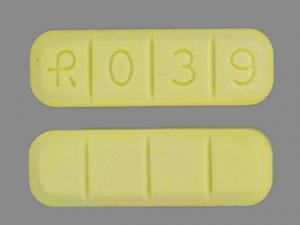
yellow Xanax Ro39 Pill
Price range: $399.00 through $450.00
-
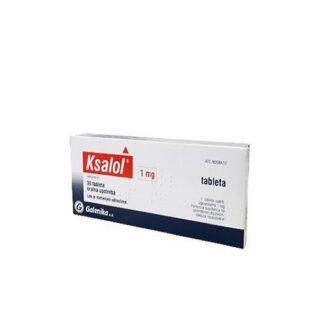
Ksalol 1mg
Price range: $399.00 through $749.00



Leave a Reply