


Introduction
Understanding how anxiety medications work is essential for anyone seeking relief while maintaining safety and balance in daily life. Questions about timing, duration, and lingering effects are common, especially when higher dosages are involved.
Anxiety and panic symptoms can interrupt work, sleep, and emotional well-being without warning. For individuals experiencing intense episodes, the uncertainty surrounding how long a medication’s effects will last can create additional stress rather than relief. Not knowing whether calmness will fade too soon, or whether drowsiness may interfere with responsibilities, often leaves people feeling uneasy. Concerns about safety, alertness, and next-day functioning are especially common when stronger dosages are prescribed.
By explaining how long 2mg xanax typically lasts, what affects its duration, and how the body processes it, this guide aims to reduce confusion and support informed, responsible decision-making.
Understanding the Medication and Its Purpose
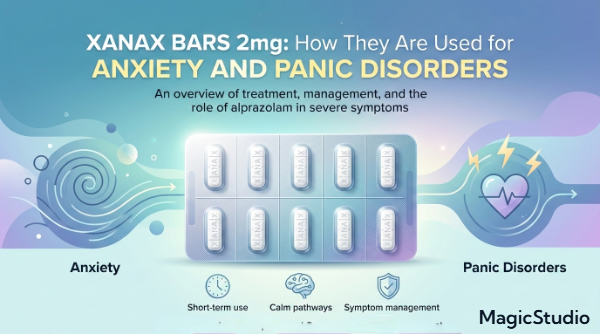
2mg xanax refers to a specific dosage strength of alprazolam, a medication commonly prescribed for anxiety and panic-related conditions. It belongs to a class known as benzodiazepine medication, which acts on the central nervous system to produce a calming effect. This calming action helps reduce excessive brain activity that contributes to panic, nervousness, and emotional distress.
Healthcare professionals may prescribe this dosage when symptoms are severe or when lower strengths have not provided adequate relief. Because this dosage is considered relatively strong, understanding its timing and effects is particularly important.
How the Medication Works in the Brain
Once taken, the medication interacts with brain chemicals that regulate calmness and emotional balance. It enhances the effect of a natural neurotransmitter responsible for slowing down overactive signals. This mechanism explains why many people experience relaxation, reduced tension, and a sense of mental quiet.
The onset of action is faster than many long-term anxiety treatments, which is why it may be used for sudden or intense episodes rather than ongoing maintenance.
How Long Do the Effects Typically Last?
For most individuals, the noticeable calming effects last approximately four to six hours. During this period, anxiety symptoms often decrease, muscle tension eases, and emotional intensity becomes more manageable. However, this timeframe refers only to the strongest effects, not the total time the medication remains in the body.
The duration of effects may vary based on individual metabolism, dosage timing, and overall health.
Understanding Half-Life and Elimination
The half-life of alprazolam averages around eleven hours in healthy adults. This means it takes roughly eleven hours for the body to reduce the active amount by half. Complete elimination usually requires several half-life cycles, which explains why traces can remain long after noticeable effects fade.
This longer presence can contribute to mild residual sensations, even after anxiety relief diminishes.
How Quickly Does It Start Working?
Most individuals feel the initial effects within thirty to sixty minutes after ingestion. Peak effects are often reached within one to two hours. This relatively rapid response is one reason the medication is used for acute anxiety or panic situations.
Because of this fast onset, caution is advised when engaging in activities that require full concentration or coordination.
Effects vs. Detection in the Body
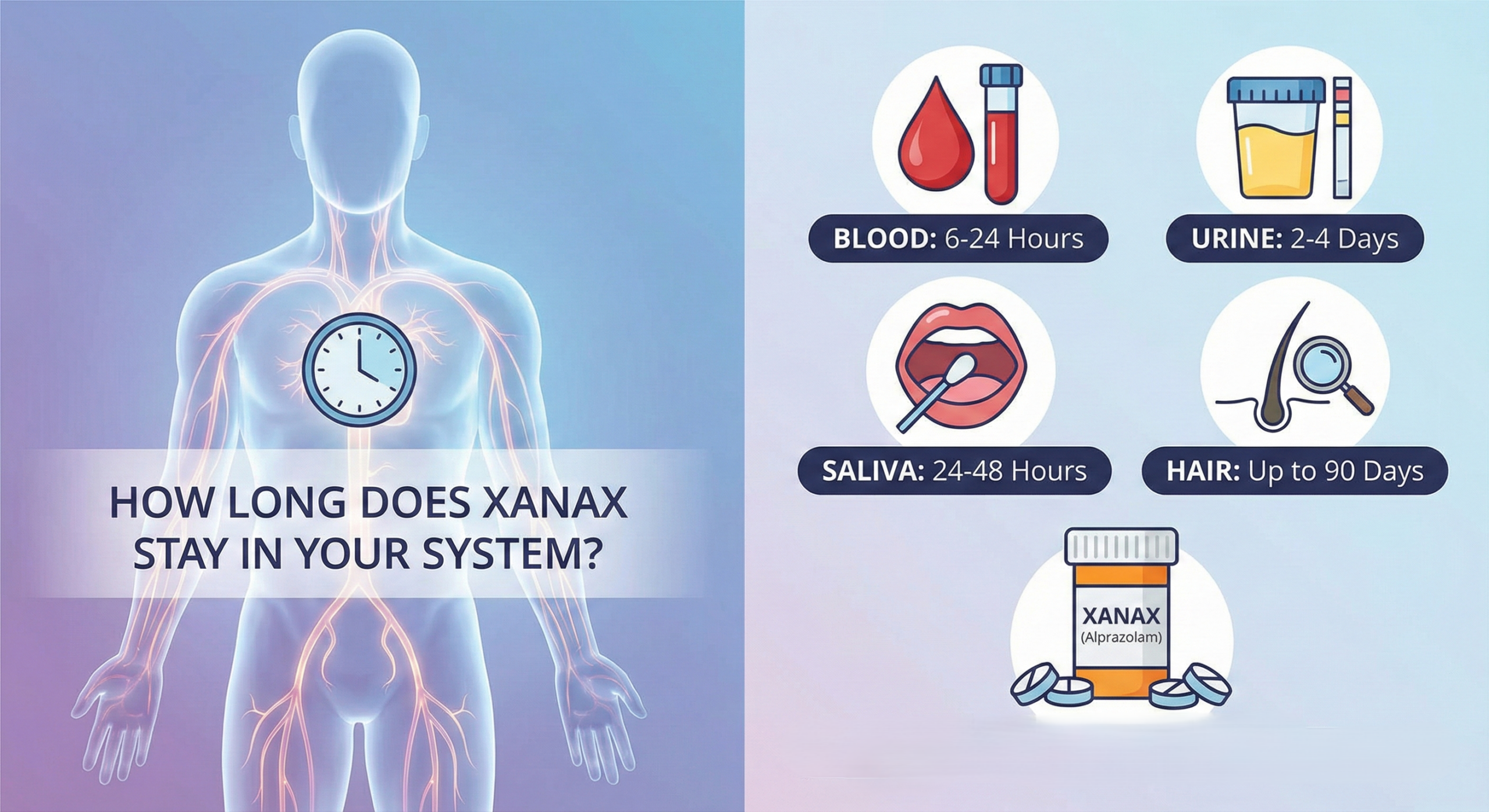
It is important to distinguish between how long the medication feels effective and how long it remains detectable. While calming sensations may fade within hours, the drug detection time can extend much longer depending on testing methods.
Urine tests may detect traces for several days, while blood tests typically show shorter detection windows. Detection does not equal impairment but reflects how long the substance remains in the system.
Factors That Influence Duration
Several variables affect how long the medication lasts. Age plays a role, as older adults often metabolize substances more slowly. Body composition, liver health, and metabolic rate also influence breakdown and elimination.
Frequency of use is another factor. With repeated exposure, tolerance development may occur, altering how long effects are felt and how strong they seem.
Immediate-Release and Extended-Release Differences
Immediate-release forms deliver the medication quickly into the bloodstream, producing faster relief but shorter duration. Extended-release versions release the medication gradually, resulting in longer-lasting effects with a smoother decline.
The formulation prescribed significantly impacts timing and overall experience.
Mental and Physical Sensations Over Time
During peak activity, individuals often notice reduced anxiety, mental calmness, and muscle relaxation. As time passes, these sensations gradually fade. Some people experience lingering tiredness or slowed thinking due to sedative effects.
The intensity of these sensations depends on sensitivity and dosage timing.
Impact on Sleep and Next-Day Functioning
When taken later in the day, the medication may influence sleep patterns. Some individuals find it easier to relax, while others notice next-day grogginess due to lingering effects. This sleep impact varies based on metabolism and individual response.
Understanding timing can help reduce unwanted daytime fatigue.
How Long It Stays in the System
Although calming effects are short-lived, the medication remains in the body longer. The drug detection time varies by test type, and small amounts may persist even after symptoms improve.
This prolonged presence highlights the importance of spacing doses appropriately.
Short-Term Use vs. Ongoing Use
Short-term use is often recommended for situational anxiety or panic episodes. When used occasionally and under supervision, risks are generally lower.
With long-term use, the body may adapt, increasing the risk of physical dependence and tolerance. Regular monitoring helps manage these risks responsibly.
Dependence and Withdrawal Considerations
Repeated use can lead to physical reliance. If stopped abruptly, withdrawal symptoms may appear. These symptoms follow a withdrawal timeline that varies by individual, dosage, and duration of use.
Gradual tapering under medical guidance helps minimize discomfort.
How the Body Processes and Removes It
The liver metabolizes alprazolam into inactive compounds, which are then excreted by the kidneys. Individuals with liver conditions may process the medication more slowly, extending its effects.
This is why dosage adjustments may be necessary for certain individuals.
Safety Awareness and Responsible Use
Because 2mg xanax is a potent dosage, it should only be used exactly as directed. Mixing it with alcohol or other depressants increases the risk of excessive sedation and impaired coordination.
Awareness of timing and effects supports safer daily planning.
When to Seek Medical Advice
Unexpected side effects, prolonged drowsiness, or concerns about timing should be discussed with a healthcare professional. Personalized guidance ensures both effectiveness and safety.
Final Thoughts
Understanding how long 2mg xanax lasts helps individuals manage expectations and make informed choices. While calming effects typically last several hours, the medication remains in the body longer, influencing alertness and coordination. Education, responsible use, and professional oversight remain essential for safe outcomes.
FAQ
How long does 2mg xanax usually last?
The strongest effects typically last four to six hours, though traces may remain in the body for much longer.
Can next-day drowsiness occur?
Yes, some people experience lingering tiredness, especially if taken late or metabolized slowly.
Does metabolism affect duration?
Yes, metabolism, age, and liver health all influence how long effects are felt.
Is this dosage considered strong?
This dosage is generally considered strong and is prescribed with careful medical supervision.
How long does it stay detectable?
Detection varies by test type, with traces sometimes present for several days.





Products
-
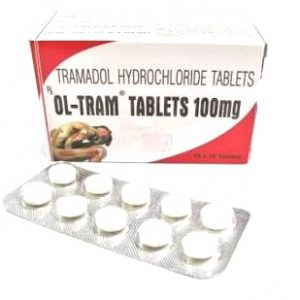 TRAMADOL 100MG
Price range: $350.00 through $1,099.00
TRAMADOL 100MG
Price range: $350.00 through $1,099.00
-
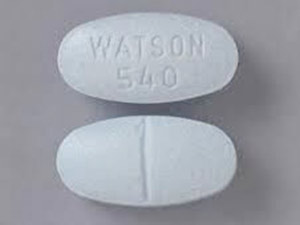 Hydrocodone Acetaminophen 10-325mg
Price range: $399.00 through $435.00
Hydrocodone Acetaminophen 10-325mg
Price range: $399.00 through $435.00
-
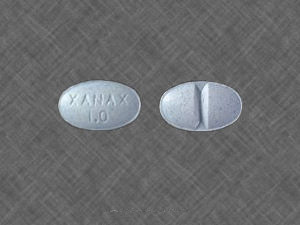 blue Xanax
Price range: $450.00 through $690.00
blue Xanax
Price range: $450.00 through $690.00
-
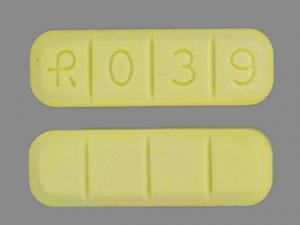 yellow Xanax Ro39 Pill
Price range: $399.00 through $450.00
yellow Xanax Ro39 Pill
Price range: $399.00 through $450.00
-
 Ksalol 1mg
Price range: $399.00 through $749.00
Ksalol 1mg
Price range: $399.00 through $749.00

Leave a Reply