

Introduction
Difficulty focusing, constant mental restlessness, impulsive decisions, and trouble staying organized are challenges many people quietly struggle with every day. The problem begins when these symptoms interfere with academic performance, work responsibilities, relationships, and self-esteem, yet go unrecognized or untreated. The agitation grows as unmanaged ADHD leads to frustration, burnout, missed opportunities, and the feeling of always falling behind despite genuine effort. The solution lies in understanding the condition and exploring medications commonly used to manage this , alongside professional guidance and supportive strategies, to improve focus, emotional regulation, and daily functioning in a safe and structured way.
Understanding ADHD Beyond Common Myths
Attention-deficit/hyperactivity disorder is a neurodevelopmental condition that affects both children and adults. It is not a lack of intelligence or motivation, but rather a difference in how the brain regulates attention, impulses, and activity levels. this may present as difficulty concentrating, forgetfulness, disorganization, restlessness, or impulsive behavior.
When left unmanaged, this can affect academic achievement, workplace performance, emotional health, and interpersonal relationships. Understanding the medical basis of this is the first step toward effective treatment and long-term improvement.
Why Medication Is Often Part of ADHD Management
Managing this usually involves a combination of approaches, including behavioral strategies, therapy, lifestyle adjustments, and medication. For many individuals, medication helps regulate brain activity related to attention and impulse control, making it easier to apply coping strategies learned through therapy.
Medications do not change personality or intelligence. Instead, they help reduce symptom intensity, allowing individuals to focus more effectively, manage tasks, and respond thoughtfully rather than impulsively.
How ADHD Medications Work in the Brain
this medications primarily target neurotransmitters involved in attention and executive functioning. These chemical messengers play a key role in focus, motivation, and emotional control. When neurotransmitter activity is balanced, the brain processes information more efficiently.
By supporting these neural pathways, this medications can help improve concentration, reduce distractibility, and support better emotional regulation. The effects vary from person to person, which is why medical supervision is essential.
Stimulant-Based Medications Used for ADHD
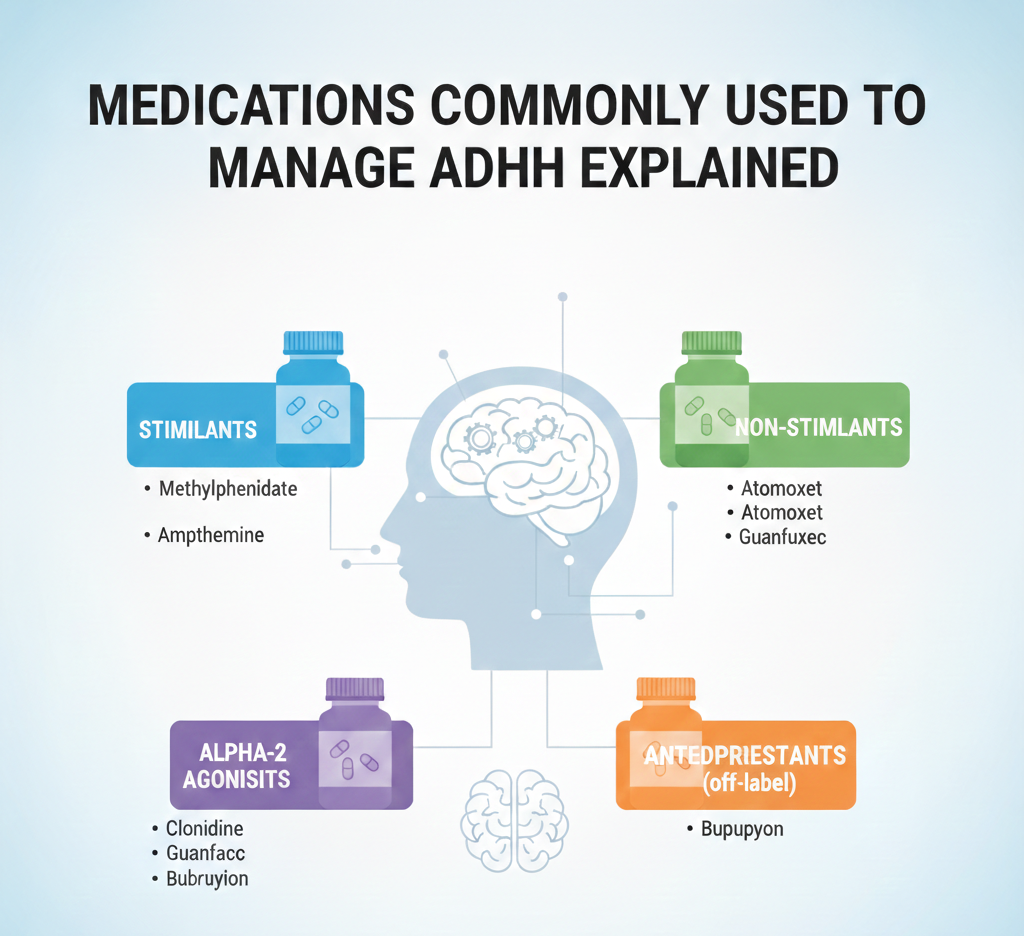
One category of ADHD medication management includes stimulant-based treatments. These medications have been studied extensively and are commonly prescribed due to their effectiveness in improving focus and reducing impulsive behavior.
Despite the name, stimulant medications do not overstimulate individuals with . Instead, they help the brain filter distractions and maintain attention. When prescribed appropriately, they can significantly improve daily functioning at school, work, and home.
Non-Stimulant Medication Options for ADHD
Not everyone responds well to stimulants, which is why non-stimulant medications are also used. These options support attention and impulse control through different neurological pathways and may be recommended for individuals with specific medical considerations.
Non-stimulant options are often part of a personalized this treatment plan, particularly when long-term symptom management and stability are priorities.
ADHD Medications and Daily Life Improvement
When managing ADHD symptoms, medication can create noticeable improvements in daily routines. Tasks that once felt overwhelming—such as completing assignments, organizing schedules, or maintaining focus during conversations—may become more manageable.
These improvements often extend beyond productivity. Better focus can reduce stress, improve self-confidence, and enhance relationships by supporting clearer communication and emotional regulation.
Medication Is Not a Standalone Solution
While medication plays an important role, it works best as part of a comprehensive approach. Behavioral therapy, organizational coaching, and structured routines reinforce the benefits of medication.
Lifestyle factors such as consistent sleep, balanced nutrition, and physical activity also support attention regulation and emotional balance. Medication creates the foundation, but habits and skills build lasting success.
ADHD in Adults and Medication Considerations
ADHD is not limited to childhood. Many adults are diagnosed later in life after years of struggling with focus, time management, and emotional regulation. Adult this treatment often focuses on improving workplace performance and daily organization.
Medication for adults is prescribed with careful consideration of health history, responsibilities, and lifestyle. Regular follow-ups ensure treatment remains effective and aligned with individual goals.
ADHD Treatment for Children and Adolescents
For younger individuals, medication decisions involve collaboration between healthcare providers, parents, and educators. The goal is to support learning, behavior, and emotional development while minimizing side effects.
Monitoring growth, sleep, and behavior is an important part of pediatric ADHD care. Treatment plans are adjusted as children grow and their needs evolve.
Safety, Monitoring, and Responsible Use
All medications used to manage ADHD require professional oversight. Providers evaluate symptom patterns, medical history, and response to treatment before making adjustments.
Regular monitoring ensures the medication supports focus and behavior without causing unwanted effects. Open communication between patients and providers is essential for safe and effective care.
Addressing Concerns About ADHD Medication
Concerns about dependency, personality changes, or long-term effects are common. When prescribed appropriately, this medications are considered safe and effective for many individuals.
Education plays a key role in easing these concerns. Understanding how medications work and what to expect helps individuals and families make informed decisions with confidence.
The Role of Therapy Alongside Medication
Therapy helps individuals develop coping strategies, organizational skills, and emotional awareness. Cognitive and behavioral approaches are especially helpful in reinforcing positive habits.
Medication reduces symptom intensity, while therapy builds long-term resilience. Together, they form a balanced and effective treatment approach.
Long-Term Outlook for ADHD Management
With proper care, individuals with this can thrive academically, professionally, and socially. Treatment plans may evolve over time, reflecting changes in lifestyle, responsibilities, and goals.
Early intervention and consistent management lead to better outcomes. Understanding medications commonly used to manage this. empowers individuals to take an active role in their health journey.
Conclusion
ADHD is a manageable condition when approached with knowledge, structure, and professional support. Medications commonly used to manage This. help regulate attention, reduce impulsivity, and support emotional balance, making daily life more manageable. When combined with therapy, healthy routines, and ongoing monitoring, medication becomes a valuable tool—not a crutch—for long-term success. Informed decisions and personalized care are the foundation of effective ADHD management.
FAQ
How do ADHD medications help improve focus?
They support brain chemicals involved in attention and impulse control, helping the mind stay engaged and organized.
Are ADHD medications safe for long-term use?
When monitored by a healthcare provider, many ADHD medications are considered safe for long-term management.
Do ADHD medications work the same for everyone?
No, responses vary. Treatment plans are adjusted based on individual symptoms and needs.
Is medication always required to manage ADHD?
Not always. Some people benefit from therapy and lifestyle changes alone, while others need medication support.
Can adults benefit from ADHD medication?
Yes, many adults experience significant improvements in focus, productivity, and emotional regulation with proper treatment.





Products
-
 TRAMADOL 100MG
Price range: $350.00 through $1,099.00
TRAMADOL 100MG
Price range: $350.00 through $1,099.00
-
 Hydrocodone Acetaminophen 10-325mg
Price range: $399.00 through $435.00
Hydrocodone Acetaminophen 10-325mg
Price range: $399.00 through $435.00
-
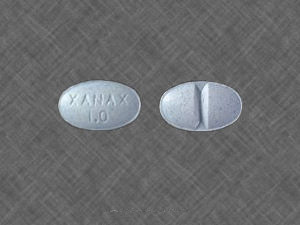 blue Xanax
Price range: $450.00 through $690.00
blue Xanax
Price range: $450.00 through $690.00
-
 yellow Xanax Ro39 Pill
Price range: $399.00 through $450.00
yellow Xanax Ro39 Pill
Price range: $399.00 through $450.00
-
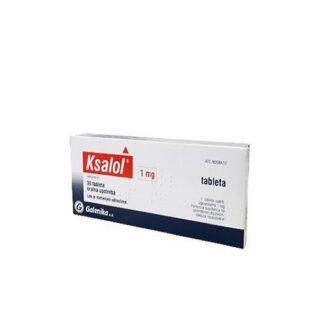 Ksalol 1mg
Price range: $399.00 through $749.00
Ksalol 1mg
Price range: $399.00 through $749.00

Leave a Reply